
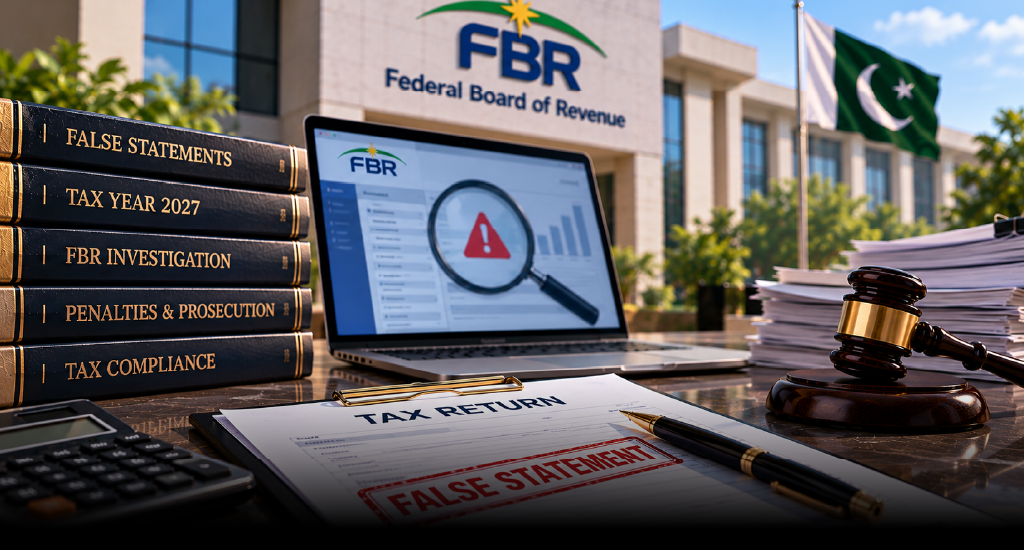
Submitting inaccurate or misleading information in a tax return can expose taxpayers to serious legal consequences in Pakistan. For Tax Year 2027, individuals and businesses should understand the provisions of the Income Tax Ordinance, 2001, particularly Section 195, which addresses false or misleading statements made to income tax authorities.
The Federal Board of Revenue (FBR) requires taxpayers to provide accurate information and comply with applicable tax laws. Errors, incomplete disclosures, or knowingly misleading declarations can create compliance risks, making professional tax guidance an important part of responsible tax management.
What Does the Law Say About False Tax Statements?
Section 195 of the Income Tax Ordinance, 2001, deals with materially false or misleading statements made to income tax authorities. The provision also addresses omissions that make a statement materially false or misleading.
Depending on the circumstances, relevant issues may arise when taxpayers submit:
- Incorrect income or financial information.
- Inaccurate declarations in income tax returns.
- Misleading information in tax-related statements or documents.
- Incomplete disclosures that materially affect the accuracy of a statement.
- Information that cannot be supported by appropriate financial records.
Taxpayers should ensure that their returns and declarations accurately reflect their financial position and contain the information required under applicable law.
What Are the Penalties for False Tax Statements?
Under Section 195, the consequences depend on the nature of the statement and the circumstances surrounding the offence.
1. Imprisonment
A person who knowingly or recklessly makes a materially false or misleading statement, or makes an omission that renders a statement materially false or misleading, may face imprisonment for up to two years upon conviction, subject to the applicable legal provisions.
2. Financial Penalties
The law also provides for fines. The applicable consequences depend on the circumstances and the relevant requirements of Section 195.
3. Legal and Tax Compliance Risks
False or misleading information can create additional tax compliance concerns. Taxpayers may need to respond to questions from the tax authorities, provide supporting documentation, or seek professional assistance to address discrepancies.
The specific consequences depend on the facts of the case and the applicable law. Not every error automatically constitutes a criminal offence.
Can Omitting Information Lead to Legal Consequences?
Yes. An omission may fall within Section 195 if it makes a statement materially false or misleading and the relevant legal requirements are satisfied.
For example, a taxpayer may submit a declaration containing several correct figures but leave out material information that changes the overall meaning of the statement.
Taxpayers should therefore review their returns for both numerical accuracy and completeness. Proper disclosure and supporting documentation can help reduce the risk of avoidable compliance problems.
How Can Individuals and Businesses Avoid Tax Reporting Issues?
Maintaining accurate records and following appropriate tax compliance procedures can help individuals and businesses reduce the risk of errors.
Verify Financial Information
Review income, expenses, investments, bank records, tax deductions, and other relevant financial information before filing a return.
Maintain Supporting Documents
Keep invoices, receipts, bank statements, financial reports, tax certificates, and other relevant records that support the information reported to the FBR.
Review Tax Returns Carefully
Check declarations, calculations, deductions, exemptions, and other entries before submitting your income tax return.
Ensure Complete and Accurate Disclosure
Provide the information required under applicable tax law. Avoid omissions that could make a statement materially inaccurate or misleading.
Seek Professional Tax Advice
If you are unsure how to report a transaction, income source, deduction, or other financial matter, consult a qualified tax professional before submitting your return.
Address Errors Promptly
If you discover an error after filing, seek professional advice about the appropriate correction or revision procedure available under the law.
Why Tax Compliance Matters for Tax Year 2027
Tax Year 2027 covers the period from July 1, 2026, to June 30, 2027. Individuals, professionals, and businesses should ensure that their tax reporting practices comply with the applicable requirements throughout the tax year.
Accurate tax reporting supports transparent financial management and helps taxpayers respond more effectively to inquiries from the tax authorities.
Businesses can further strengthen compliance by introducing internal review procedures, maintaining organized financial records, and ensuring that the information used in tax filings is properly verified.
How Xact Legal Can Help
Xact Legal provides tax and legal advisory services to individuals and businesses in Pakistan. Our team can assist with income tax return filing, tax compliance, review of financial disclosures, documentation, and guidance on applicable tax laws. If you are concerned about an inaccurate tax declaration, an omission, or a potential compliance issue, Xact Legal can help you understand your obligations and explore appropriate steps to address the matter. Professional guidance can help you make informed decisions and manage tax-related risks more effectively.
Frequently Asked Questions
1. What is the penalty for false tax statements in Pakistan?
Section 195 of the Income Tax Ordinance, 2001, provides for legal consequences for materially false or misleading statements. Knowingly or recklessly making such a statement may result in imprisonment of up to two years, a fine, or both upon conviction, subject to the applicable law.
2. Can the FBR take action against incomplete tax declarations?
An omission may fall within Section 195 if it makes a statement materially false or misleading and the legal requirements of the provision are satisfied.
3. Can a taxpayer be imprisoned for submitting false information?
Yes. Section 195 provides for imprisonment of up to two years for certain offences involving knowingly or recklessly making materially false or misleading statements, subject to conviction.
4. What should I do if I discover an error in my tax return?
You should seek advice from a qualified tax professional to determine the appropriate corrective procedure under the applicable law. The recommended action depends on the nature of the error and the circumstances.
5. How can Xact Legal help with tax compliance?
Xact Legal can provide guidance on income tax return filing, tax compliance, financial disclosures, documentation, and relevant legal requirements to help individuals and businesses manage their tax obligations.
Conclusion
The provisions governing false or misleading tax statements highlight the importance of accuracy, completeness, and proper documentation in Pakistan’s tax system. Under Section 195 of the Income Tax Ordinance, 2001, certain false or misleading statements can carry significant legal consequences.
Individuals and businesses should review their tax declarations carefully, maintain reliable financial records, and obtain professional advice when necessary.
Xact Legal helps individuals and businesses navigate tax compliance requirements with informed, practical tax and legal guidance.
Disclaimer: This article is intended for general informational purposes only and does not constitute legal or tax advice. The application of the law depends on the facts and circumstances of each case. Consult a qualified tax or legal professional for advice specific to your situation.