
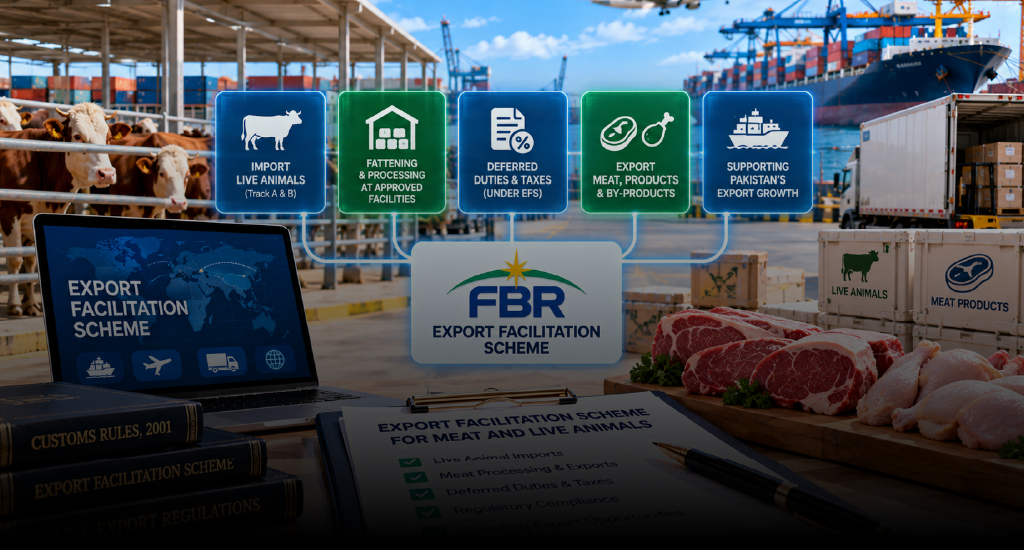
The Federal Board of Revenue (FBR) has proposed amendments to the Customs Rules, 2001, to extend the Export Facilitation Scheme (EFS) to imported live animals, meat processing and meat exports. The proposed framework aims to support export-oriented livestock businesses by allowing eligible operators to import animals and approved inputs with deferred customs duties and taxes, subject to strict export and compliance requirements.
Key Features of the Proposed Scheme
1. Two Export Tracks
The proposed framework introduces two routes:
- Track A: Import live animals, fatten them at approved facilities and re-export them alive.
- Track B: Import and fatten animals, slaughter and process them, then export the resulting meat, meat products and by-products.
2. Deferred Duties and Taxes
Authorised users may import eligible animals and approved fattening inputs without upfront payment of specified duties and taxes. The liability would be recorded against the required security and remain subject to the scheme’s conditions.
3. Eligibility and Authorisation
Applicants would need to meet registration requirements and obtain authorisation for approved premises and relevant activities. The proposed rules also provide for the establishment or expansion of feedlots, quarantine facilities and meat-processing plants.
4. Animal Traceability and Export Deadlines
The draft framework includes animal identification, health certification, recordkeeping and export timelines. Imported animals would generally need to be exported or slaughtered within prescribed periods, while meat products would be subject to separate export deadlines.
5. Compliance and Audits
Businesses would be required to maintain records, reconcile imported inputs with exports and comply with animal-health, customs and food-safety requirements. Non-compliance may result in tax liabilities or other action under the applicable rules.
What Should Livestock and Meat Exporters Do?
Businesses considering the scheme should review their eligibility, obtain the required authorisations and maintain accurate import, production, traceability and export records. They should also confirm the final rules and applicable export-policy requirements before relying on any proposed concession.
How Xact Legal Can Help
Xact Legal assists businesses with tax compliance, regulatory documentation and guidance on Pakistan’s tax and legal requirements. Our team can help exporters understand applicable obligations and prepare for compliance under relevant customs and tax frameworks.
Contact Xact Legal for professional guidance on export-related tax and regulatory matters in Pakistan.