
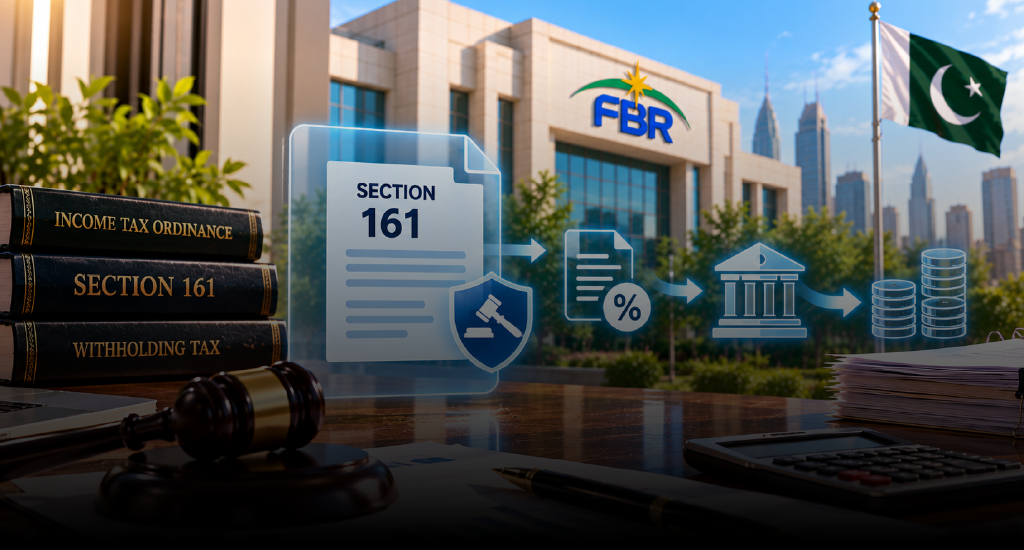
The Federal Board of Revenue (FBR) can hold businesses, employers and other withholding agents personally liable when they fail to collect or deduct tax as required, or collect or deduct tax but fail to deposit it with the government. These obligations are addressed under Section 161 of Pakistan’s Income Tax Ordinance, 2001.
For Tax Year 2027, understanding Section 161 is important for businesses and other persons responsible for withholding tax. Non-compliance can lead to recovery proceedings and additional financial liabilities, even where the original transaction was completed.
What Is Section 161 of the Income Tax Ordinance?
Section 161 establishes personal liability for certain withholding tax defaults. The Commissioner Inland Revenue may issue an order requiring the responsible person to pay the amount of tax that should have been collected or deducted, or that was collected or deducted but not deposited with the government.
The provision generally applies where a person:
- Fails to collect tax when legally required.
- Fails to deduct withholding tax from a payment.
- Collects or deducts tax but does not deposit it as required under Section 160.
- Fails to deposit certain tax collected under the repealed Income Tax Ordinance where the applicable provision remains relevant.
Tax Year 2027 runs from July 1, 2026, to June 30, 2027.
Who Can Be Held Liable Under Section 161?
The provision can affect different types of withholding agents, depending on their responsibilities under the tax law.
Examples include:
- Employers responsible for deducting tax from employees’ salaries.
- Businesses required to deduct tax from payments to suppliers or service providers.
- Companies making payments subject to withholding tax.
- Other withholding agents responsible for collecting or deducting tax under the Ordinance.
The key consideration is whether the person was legally required to collect or deduct tax and failed to fulfil that obligation, or failed to deposit tax already collected or deducted.
What Happens When a Withholding Agent Defaults?
Where a withholding tax default occurs, the Commissioner Inland Revenue may initiate proceedings to recover the unpaid amount from the person responsible.
The process can involve the following stages:
1. Identification of the Default
The tax authorities identify a failure to collect, deduct or deposit tax as required under the applicable provisions.
2. Opportunity to Be Heard
Under Section 161(1A), the person concerned must be given an opportunity to present their position before recovery proceedings under Section 161(1).
3. Recovery Order
After considering the relevant circumstances, the Commissioner may issue an order establishing the amount payable by the responsible person.
4. Recovery of Outstanding Tax
The amount determined under the recovery order may be recovered in accordance with the applicable legal provisions.
Businesses should maintain accurate withholding tax records and respond promptly to notices to help establish whether the tax was properly deducted, deposited or otherwise accounted for.
What if the Recipient Has Already Paid the Tax?
Section 161(1B) provides an important safeguard against recovering the same underlying tax twice.
If the tax that should have been deducted or collected has already been paid by the relevant taxpayer, the authorities cannot recover that same tax amount again from the person who failed to collect or deduct it, once the required payment is established.
However, the withholding agent may still be liable for a default surcharge at 12% per annum, calculated from the date the tax should have been collected or deducted until the date it was actually paid, as provided under the section.
This distinction is important: payment of the underlying tax by the recipient may prevent duplicate recovery, but it does not automatically eliminate the withholding agent’s remaining liability.
Can a Withholding Agent Recover the Tax From the Recipient?
Yes. Under Section 161(2), a person held liable for tax because of a failure to collect or deduct it may recover that amount from the person from whom the tax should originally have been collected or deducted.
For example, where a business becomes liable for withholding tax that should have been deducted from a payment, the law may allow the business to seek recovery of that amount from the relevant recipient.
The right to recover the amount does not automatically remove the withholding agent’s responsibilities or other consequences arising from the original default.
Can the FBR Amend a Tax Recovery Order?
Section 161(3) allows the Commissioner Inland Revenue to amend or further amend a recovery order after making or arranging the necessary inquiries.
This power may be exercised where the existing order is considered erroneous insofar as it is prejudicial to the interests of revenue.
However, the person affected must be given an opportunity to be heard before the recovery order is amended. This allows the person to explain the relevant facts and respond to the proposed change.
How Can Businesses Avoid Section 161 Tax Recovery Issues?
Businesses and withholding agents should establish reliable processes for managing tax deductions and deposits.
Recommended practices include:
- Identify which payments are subject to withholding tax.
- Apply the correct tax treatment to each transaction.
- Deposit collected or deducted tax within the applicable deadlines.
- Reconcile withholding tax statements with accounting records.
- Maintain payment receipts and withholding tax certificates.
- Respond promptly to notices from the FBR.
- Seek professional advice when a withholding tax liability is disputed.
Regular reconciliation and accurate documentation can help identify errors early and reduce the risk of recovery proceedings.
How Can Xact Legal Help?
Withholding tax defaults can create financial and legal complications for businesses, employers and other tax withholding agents. Understanding the applicable provisions, reviewing recovery orders and maintaining supporting records are essential steps in managing these risks.
Xact Legal provides tax and corporate advisory support to help individuals and businesses understand Pakistan’s tax regulations, review withholding tax compliance and address tax-related concerns.
Contact Xact Legal for professional assistance with tax compliance, withholding tax matters and recovery proceedings.