
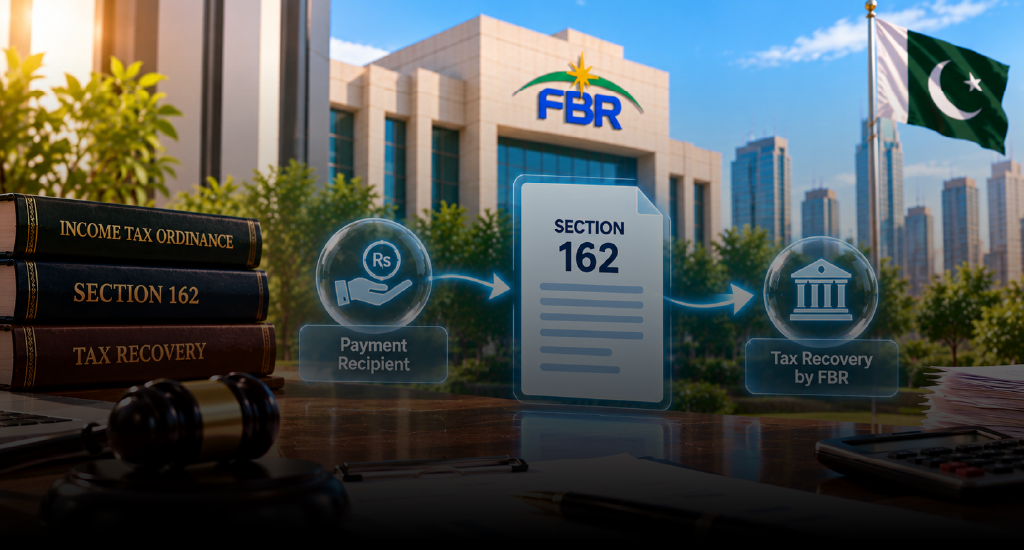
The Federal Board of Revenue (FBR) can recover tax directly from a taxpayer or payment recipient when the required tax was not collected or deducted at source. This authority is provided under Section 162 of Pakistan’s Income Tax Ordinance, 2001.
For Tax Year 2027, understanding this provision is important for individuals, businesses, suppliers and other taxpayers whose transactions are subject to withholding tax. Even when tax is recovered from the recipient, the person responsible for failing to deduct tax may still face additional legal and financial consequences.
What Is Section 162 of the Income Tax Ordinance?
Section 162 empowers the Commissioner Inland Revenue to recover tax that should have been collected or deducted but was not.
The provision applies when a person fails to:
- Collect tax where required under the relevant provisions of the Income Tax Ordinance.
- Deduct tax from a payment where withholding tax is legally required.
In such cases, the Commissioner may issue an order and recover the amount from the person from whom the tax should have been collected or the person who received the payment from which tax should have been deducted.
Tax Year 2027 covers the period from July 1, 2026, to June 30, 2027.
Who Can Be Affected by Section 162?
Section 162 can affect taxpayers and businesses involved in transactions where tax collection or deduction was required but did not take place.
Examples include:
- Suppliers and service providers: Where tax should have been deducted from payments made to them.
- Business owners: Where a transaction was subject to withholding tax but the required amount was not deducted.
- Individuals receiving taxable payments: Where the applicable law required tax to be deducted at source.
- Other taxpayers: Where a statutory tax collection or deduction requirement was not fulfilled.
The application of Section 162 depends on the relevant transaction, the applicable tax provision and the circumstances of the default.
How Does Tax Recovery Under Section 162 Work?
The recovery process generally involves the following steps.
1. Identification of the Tax Default
The tax authorities identify a transaction in which tax was required to be collected or deducted but was not.
2. Determination of the Responsible Taxpayer
The Commissioner identifies the person from whom tax should have been collected or the recipient of the payment from which tax should have been deducted.
3. Recovery Order
Under Section 162(1), the Commissioner may issue an order for recovery of the amount that was not collected or deducted.
4. Recovery of the Outstanding Amount
The amount may then be recovered from the relevant person in accordance with the applicable legal provisions.
Taxpayers who receive a notice or recovery order should review the transaction records, tax treatment and supporting documents before responding.
Does Recovery From the Recipient Protect the Withholding Agent?
No. Section 162(2) makes clear that recovering the underlying tax from the recipient does not automatically protect the person who failed to deduct tax from further consequences.
Depending on the circumstances and applicable provisions, the withholding agent may still face:
1. Other Legal Action
The person responsible for the failure may remain subject to other legal action relating to the withholding tax default.
2. Default Surcharge
A default surcharge may remain payable under the applicable provisions of the Income Tax Ordinance, even if the underlying tax is recovered from the recipient.
3. Disallowance of Business Expenses
The tax authorities may disallow a deduction for the expense associated with the withholding tax default where the relevant provisions permit such disallowance.
These consequences are important for businesses because resolving the underlying tax payment does not necessarily settle every issue arising from the original failure.
What Is the Difference Between Sections 161 and 162?
Sections 161 and 162 address withholding tax defaults but focus on different recovery mechanisms.
| Section | Main purpose |
|---|---|
| Section 161 | Establishes personal liability for a person who fails to collect or deduct tax, or fails to deposit tax already collected or deducted. |
| Section 162 | Allows recovery of tax that was not collected or deducted directly from the person from whom it should have been collected or the recipient of the relevant payment. |
Both provisions can have significant implications for businesses and taxpayers. The applicable section depends on the nature of the default and the relevant facts.
How Can Businesses Reduce Section 162 Compliance Risks?
Businesses should establish effective procedures to ensure that withholding tax obligations are identified and fulfilled correctly.
Recommended steps include:
- Review payments to suppliers, contractors and service providers for withholding tax requirements.
- Apply the correct tax rate and treatment under the relevant provisions.
- Deduct or collect tax where legally required.
- Deposit collected or deducted tax within the applicable statutory deadlines.
- Maintain invoices, contracts, payment receipts and withholding tax certificates.
- Reconcile tax records with accounting entries and tax returns.
- Seek professional advice when a transaction’s tax treatment is unclear.
Accurate records and timely compliance can help reduce the risk of tax recovery proceedings and additional liabilities.
How Can Xact Legal Help?
Tax recovery under Section 162 can affect both payment recipients and businesses responsible for withholding tax. Understanding the legal requirements and reviewing the circumstances of a default can help parties determine the appropriate response.
Xact Legal provides tax and corporate advisory support to help individuals and businesses understand Pakistan’s tax regulations, review withholding tax concerns and maintain accurate compliance records.
Contact Xact Legal for professional assistance with withholding tax matters, tax recovery concerns and related advisory services.