

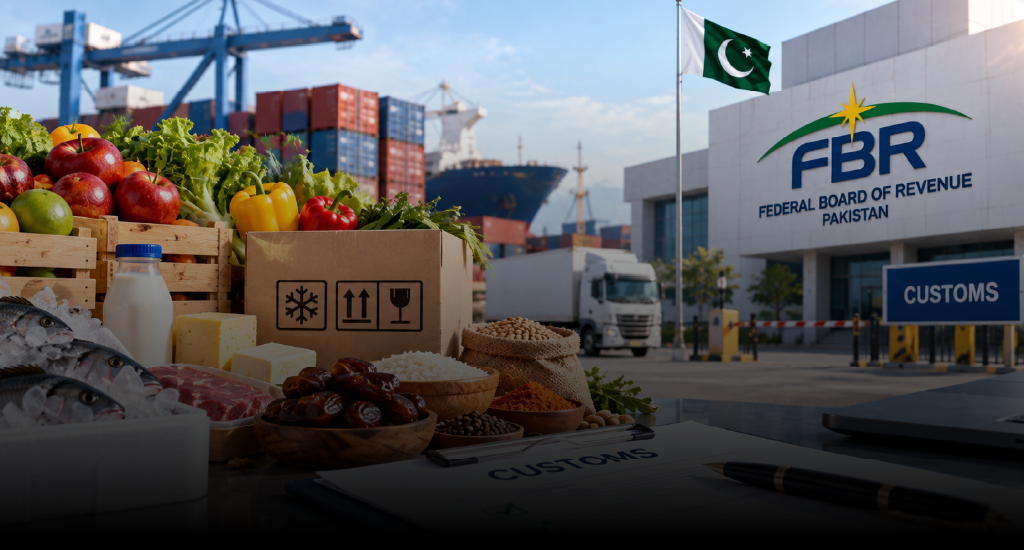
The Federal Board of Revenue (FBR) has notified 29 categories of goods as perishable goods under Section 98 of the Customs Act, 1969, replacing the previous notification issued in 1999.
The change was introduced through SRO 1629(I)/2026 dated September 18, 2026, providing an updated framework for the treatment of perishable goods in customs warehousing.
29 Categories Classified as Perishable
The revised list covers a wide range of food, agricultural and other products, including:
- Fruits and vegetables
- Fish and meat
- Eggs and dairy products
- Dates and dry fruits
- Food grains
- Spices, tea, cocoa and coffee
- Sugar and confectionery
- Edible vegetable oil and oil-seeds
- Plants, roots, hides and skins
- Syrups, jams and condiments
- Soft drinks and other specified products
The notification also covers certain tobacco products and other goods that may deteriorate during storage.
Exception for Properly Packaged Food Products
FBR has introduced an important exception for certain preserved, canned, bottled or packaged edible products.
Products carrying a manufacturer-specified expiry date may not be treated as perishable for warehousing surcharge purposes, provided they meet prescribed storage and certification requirements.
The goods must be stored according to the manufacturer’s specified conditions, while the customs bonded warehouse licence holder must certify that appropriate storage facilities are available.
The required certificate must be uploaded by the importer or authorised clearing agent when filing the relevant In-Bond Goods Declaration.
What This Means for Importers
The revised classification is particularly relevant for businesses involved in the import, storage and customs clearance of food and agricultural products.
Importers should review:
- Whether their goods fall within the revised perishable-goods categories.
- Applicable customs warehousing requirements.
- Storage conditions prescribed by manufacturers.
- Required warehouse certifications.
- Documentation submitted through PSW and WeBOC.
Xact Legal – Customs & Tax Compliance Support
Changes in customs regulations can affect importers’ warehousing costs, documentation and compliance obligations.
Xact Legal provides professional tax, customs and corporate legal support to businesses in Pakistan, helping them understand regulatory requirements and manage compliance matters.
Need assistance with customs or tax compliance? Contact Xact Legal for professional guidance.