
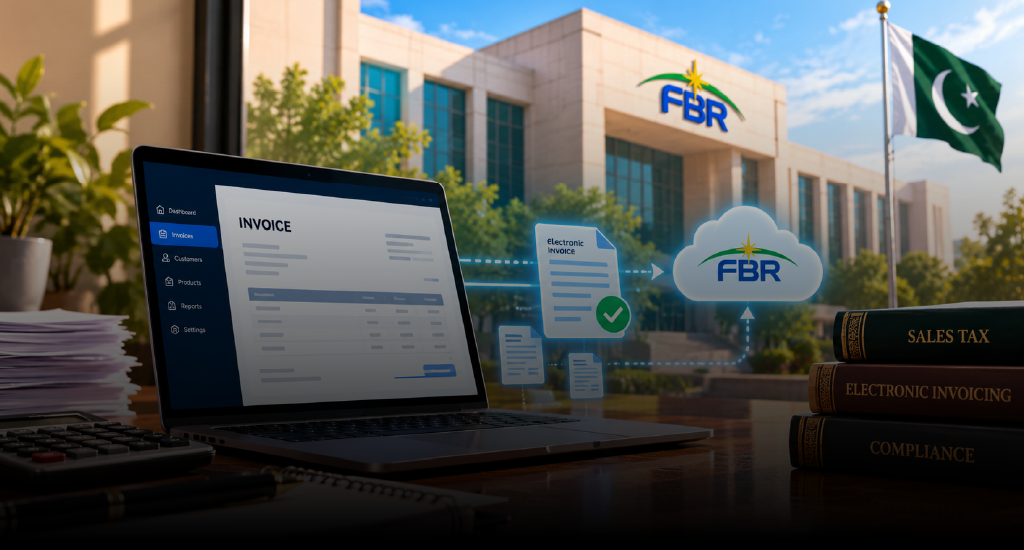
The Federal Board of Revenue (FBR) has issued Sales Tax General Order No. 01 of 2026 to streamline electronic sales tax invoicing and integration requirements for registered persons in Pakistan. The order clarifies how businesses can engage licensed integrators and establishes rules for correcting electronic sales tax invoices generated through the FBR’s computerized system.
These measures aim to improve digital tax reporting, simplify integration procedures, and strengthen transparency in sales tax compliance.
What Is FBR Sales Tax General Order No. 01 of 2026?
The order, dated March 30, 2026, addresses the integration of registered persons’ electronic invoicing systems with the FBR’s computerized system under Section 23 of the Sales Tax Act, 1990.
Previously, certain businesses reported difficulties involving the engagement of multiple licensed integrators. The new order provides greater flexibility by allowing registered persons to engage one or more licensed integrators, as approved or notified by the FBR, wherever required.
Key Changes in FBR Electronic Invoicing Rules
1. Businesses Can Engage Multiple Licensed Integrators
Registered persons may engage one or more licensed integrators to connect their electronic invoicing hardware and software with the FBR’s computerized system.
This flexibility can help businesses manage integration requirements according to their operational needs and existing technology infrastructure.
2. Electronic Sales Tax Invoices Can Be Corrected Within 72 Hours
The order allows an integrated person to cancel, delete, or edit a valid electronic sales tax invoice generated through the FBR system due to a bona fide mistake within 72 hours of invoice generation.
This provision gives businesses a defined period to correct genuine invoicing errors while maintaining proper digital records.
3. Approval Is Required After the 72-Hour Period
If a business needs to cancel, delete, or edit an electronic sales tax invoice after the initial 72-hour period, prior approval from the concerned Commissioner Inland Revenue is required.
Businesses should therefore review invoice details carefully and address errors promptly to avoid unnecessary administrative delays.
Who Needs to Pay Attention to These Rules?
The order is particularly relevant to:
- Sales tax-registered businesses required to integrate electronic invoicing systems.
- Retailers, wholesalers, manufacturers, and other registered suppliers.
- Finance and accounts teams responsible for sales tax invoices.
- Businesses using licensed third-party software and integration providers.
- Organisations managing high volumes of electronic invoices.
The specific integration obligations applicable to a business depend on the relevant FBR notifications and its registration status.
How Businesses Can Prepare for Compliance
Businesses can take several practical steps to improve compliance with the updated electronic invoicing procedures:
- Review integration arrangements: Confirm that the business is working with licensed integrators where required.
- Strengthen invoice verification: Check customer details, tax calculations, and transaction information before generating invoices.
- Monitor the 72-hour correction window: Establish internal procedures for identifying and correcting genuine errors promptly.
- Maintain supporting records: Keep relevant invoices, approvals, and correction records organised.
- Train finance teams: Ensure staff understand the difference between corrections within 72 hours and those requiring prior approval.
These measures can help businesses reduce invoicing errors and manage their sales tax reporting responsibilities more efficiently.
How Xact Legal Can Help
Xact Legal provides tax and legal advisory services to help businesses understand Pakistan’s evolving tax regulations and compliance requirements.
Our team can assist businesses in understanding electronic invoicing obligations, reviewing sales tax compliance procedures, and identifying potential regulatory risks.
Contact Xact Legal for professional guidance on sales tax compliance, FBR regulations, and electronic invoicing requirements in Pakistan.