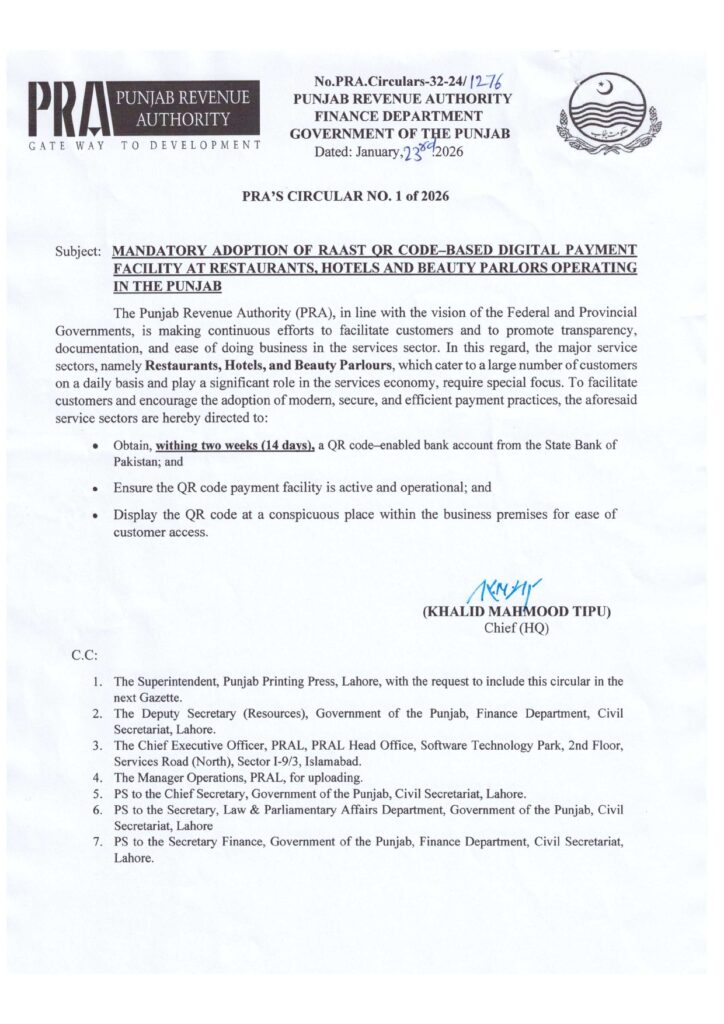

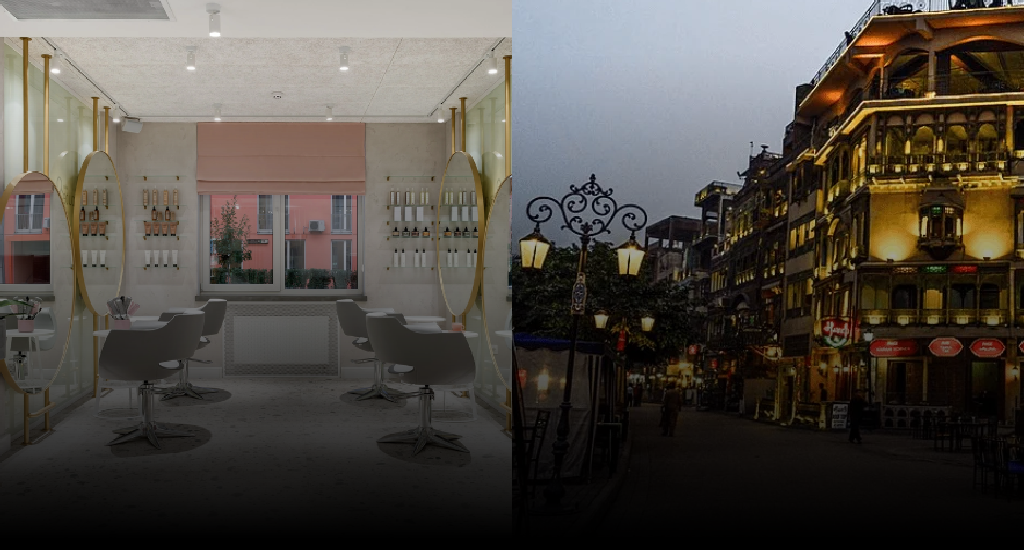
On January 23, 2026, the Punjab Revenue Authority (PRA) issued Circular No. 1 of 2026 (No. PRA.Circulars-32-24/1276), introducing a significant compliance requirement for the province’s service industry. The circular makes it mandatory for all restaurants, hotels, and beauty parlors operating in Punjab to implement RAAST QR code–based digital payment systems within 14 days of issuance.
This move marks another step in Pakistan’s broader push toward digitalization, transparency, and formal documentation of the economy.
What Does the Circular Require?
Under the directive, covered businesses must:
- Open a RAAST QR–enabled bank account with a bank regulated by the State Bank of Pakistan (SBP).
- Activate the digital payment facility within 14 days.
- Prominently display the RAAST QR code at their premises so customers can conveniently make payments.
The requirement applies across Punjab and covers small, medium, and large establishments within the specified sectors.
What Is RAAST?
RAAST is Pakistan’s instant payment system developed by the State Bank of Pakistan. It enables secure, real-time digital transactions between bank accounts using simple identifiers such as mobile numbers or QR codes.
With RAAST QR codes, customers can:
- Scan the merchant’s QR code using their banking app.
- Enter the payment amount.
- Complete the transaction instantly-without cash or card swipes.
The system is designed to be fast, low-cost, and secure.
Why Has This Been Made Mandatory?
The circular aligns with the government’s broader objectives of:
- Enhancing transparency in business transactions
- Improving tax documentation and compliance
- Reducing reliance on cash-based payments
- Encouraging secure and efficient digital payment methods
By mandating QR-based payments in high-transaction sectors like restaurants and salons, the authorities aim to increase financial documentation and bring more transactions into the formal economy.
Impact on Businesses
Compliance Obligation
Businesses must act quickly to meet the 14-day deadline. Non-compliance may expose them to penalties, inspections, or other regulatory consequences under applicable tax laws.
Operational Adjustments
Establishments will need to:
- Coordinate with their banks for RAAST QR activation.
- Train staff on handling digital payments.
- Integrate digital receipts into their accounting systems.
Improved Record-Keeping
Digital payments create automatic transaction records, which can simplify bookkeeping and reconciliation.
Benefits for Customers
For consumers, the initiative offers:
- Faster checkout experiences
- Reduced dependency on cash
- Secure payment options
- Immediate transaction confirmations
In a post-pandemic world where contactless payments are increasingly preferred, this requirement may also improve customer convenience and safety.
Challenges to Anticipate
While the initiative is progressive, businesses may face:
- Initial resistance from cash-preferred customers
- Staff training gaps
- Connectivity or technical issues
- Adjustment to digital accounting systems
However, as digital adoption grows nationwide, these challenges are likely to diminish over time.
The Bigger Picture
The mandatory adoption of RAAST QR codes reflects a structural shift in Pakistan’s services economy. By targeting restaurants, hotels, and beauty parlors sectors with high consumer interaction the PRA is signaling a serious push toward digitization and documentation.
This development also aligns with global trends where governments are encouraging cashless economies to curb tax evasion, improve transparency, and enhance financial inclusion.
Final Thoughts
PRA Circular No. 1 of 2026 is more than just a compliance requirement it is part of a broader economic transformation. Businesses operating in Punjab’s hospitality and personal care sectors should treat this as an opportunity to modernize their payment systems and streamline operations.
With timely compliance and proper implementation, the transition to RAAST QR–based payments can benefit businesses, customers, and the provincial economy alike.