
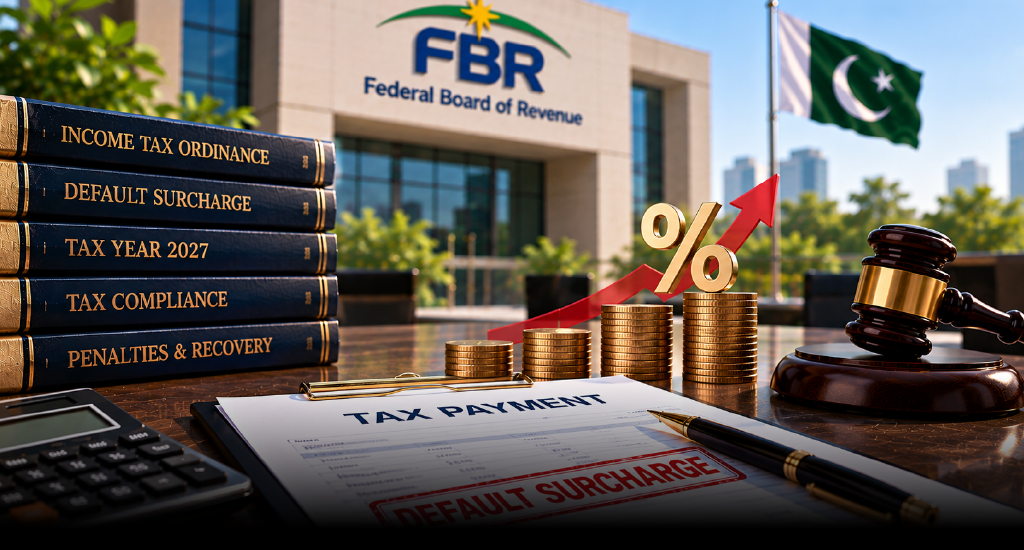
The Federal Board of Revenue (FBR) has outlined the default surcharge rules applicable to taxpayers in Pakistan for Tax Year 2027 under Section 205 of the Income Tax Ordinance, 2001. Taxpayers who fail to pay tax on time, underpay advance tax, or do not deposit withholding tax may face additional financial liabilities.
Understanding these rules can help individuals and businesses avoid unnecessary costs and maintain tax compliance.
What Is the FBR Default Surcharge?
A default surcharge is an additional amount charged when a taxpayer fails to meet certain tax payment obligations by the prescribed deadline.
Under Section 205, the applicable rate depends on the type of default:
- Unpaid tax and penalties: 12% per annum or KIBOR plus 3 percentage points, whichever is higher.
- Advance tax defaults: Generally, 12% per annum under the applicable provisions.
- Withholding tax defaults: 12% per annum on the amount not collected, deducted, or deposited as required by law.
The surcharge is calculated for the period specified under the relevant provision.
When Can the FBR Charge Default Surcharge?
1. Late Payment of Tax
Taxpayers who fail to pay income tax, applicable penalties, or other specified amounts by the due date may become liable for a default surcharge. The amount generally runs from the payment due date until the outstanding amount is paid.
2. Advance Tax Shortfalls
Taxpayers required to pay advance tax under Section 147 may face a surcharge if they fail to pay the required amount. Additional rules apply where advance tax payments fall below the specified threshold.
3. Withholding Tax Defaults
Businesses and other withholding agents must collect or deduct tax where required and deposit it with the FBR within the prescribed timeframe. Failure to fulfil these obligations may result in a default surcharge on the unpaid amount.
Can Default Surcharge Be Reduced or Refunded?
Yes. The law provides for adjustments in certain circumstances. If the underlying tax, penalty, or other amount is subsequently determined not to be payable, the related surcharge may be refundable to the extent permitted under the law.
Where an order reduces the underlying tax or penalty, the default surcharge may also be adjusted accordingly. The outcome depends on the relevant proceedings and applicable provisions.
How Xact Legal Can Help
Xact Legal provides tax and legal advisory services in Pakistan to help individuals and businesses manage their tax obligations. Our services include income tax return filing, tax compliance guidance, review of tax liabilities, and assistance with tax-related disputes. If you have received a tax notice or are concerned about default surcharge, our team can help you understand the applicable rules and identify appropriate next steps.
Frequently Asked Questions
What is the default surcharge rate for Tax Year 2027?
For general unpaid tax and specified amounts, the rate is 12% per annum or KIBOR plus 3 percentage points, whichever is higher. Separate rules apply to advance tax and withholding tax defaults.
Can withholding tax defaults attract a surcharge?
Yes. Failure to collect, deduct, or deposit withholding tax as required may attract a surcharge of 12% per annum under Section 205.
Can the FBR adjust a default surcharge?
The surcharge may be reduced or refunded in certain circumstances, including where the underlying tax or penalty is subsequently reduced or held not payable.
How can I avoid default surcharge?
Pay tax by the prescribed deadlines, fulfil advance tax obligations, deposit withholding tax promptly, and maintain accurate financial records.
Conclusion
Section 205 of the Income Tax Ordinance, 2001, establishes important rules for default surcharge in Pakistan. Late payments, advance tax shortfalls, and withholding tax defaults can increase a taxpayer’s financial liabilities.
Timely payments and professional tax guidance can help individuals and businesses reduce compliance risks. Contact Xact Legal for assistance with tax compliance and tax-related legal matters.
Disclaimer: This article is for general informational purposes only and does not constitute legal or tax advice. The applicable rules depend on the facts and circumstances of each case.